
Learning and work in Knowmad Society

Edited by John W. Moravec
What happens when the work someone can do exceeds the role an institution assigns them? Knowmad Society examines how education and organizations can make room for people to learn, connect, and contribute across changing tasks and settings.
Edited by John W. Moravec, the book brings together nine authors from three continents around the idea of the knowmad, a nomadic knowledge worker. Their chapters connect the freedom to direct one’s learning with the conditions needed to put knowledge to work. Democratic schools, peer learning, a business school, and alternatives to hierarchical management give that argument concrete settings.
Published by Education Futures in 2013. Available in paperback and as a pay-what-you-want PDF.
Preview the book on Google Books.
Learning, work, and autonomy
A job title or qualification can describe a role without capturing what someone can contribute to a new problem. Knowmad Society examines the capacity to interpret situations, connect with others, learn, and put knowledge to use as work changes.
That capacity has consequences for institutions. Schools decide how much scope learners have to pursue questions and build relationships. Organizations decide who can act on an idea, how knowledge circulates, and how people share responsibility. The contributors examine those decisions through democratic schools, a business school, peer learning, and alternatives to hierarchical management.
The book puts a question to educators and leaders: if people need initiative and judgment, what must change in the institutions that educate and employ them? Developing those capacities requires choices about authority, access to knowledge, and responsibility. Those choices run through the volume.
What you’ll find inside
The introduction is followed by eight chapters:
- Human capital development, John W. Moravec, on learning and work in Knowmad Society.
- Skills and competencies, Cristóbal Cobo, on what knowmadic workers need to develop.
- Learning choreography, Thieu Besselink, on organizing conditions for learning.
- Sudbury schools and democratic education, Christel Hartkamp, on learner freedom and responsibility.
- Knowmads Business School, Pieter Spinder, on enabling knowmads through educational practice.
- Getting from top-down to all-on-top, Edwin de Bree and Bianca Stokman, on organizational participation.
- Relationships as the ultimate pedagogy, Christine Renaud, on learning through exchanges between people.
- Society30 and new value creation, Ronald van den Hoff, on knowledge, relationships, and economic activity.
An afterword by Gary Hart completes the volume. Chapter summaries and short passages support browsing before choosing where to read in depth.
Is this the book for you?
Read Knowmad Society if your work raises questions about who can learn, contribute, or make decisions:
- Educators and school leaders: examine how learner freedom, relationships, and responsibility shape education beyond a prescribed path.
- Organizational leaders and teams: explore how expertise and initiative can move across roles, and what that asks of management.
- Researchers and students: compare arguments about knowledge work with the educational and organizational approaches presented by the contributors.
Begin with the chapter closest to a decision you face. A team or reading group can pair an education chapter with an organizational chapter, then examine a rule that governs who may act on an idea. Chapter summaries help you choose where to start; the book invites annotation, adaptation, and exchange.
About the editor
John W. Moravec is an education futurist and founder of Education Futures. His work on knowmads, invisible learning, and education futures examines how people develop and use knowledge across institutions, networks, and communities. He co-authored Aprendizaje Invisible and edited Emerging education futures.
Get the book
Choose the paperback for a print copy to read and annotate, or set your price for the PDF edition. Both contain the complete English text. For a course or reading group, the Creative Commons license permits sharing and adaptation with attribution under the same license.
| Publication | Details |
|---|---|
| Title | Knowmad Society |
| Editor | John W. Moravec |
| Publisher | Education Futures LLC, 2013 |
| Language | English |
| Formats | Paperback and PDF |
| PDF length | 273 pages, including the cover |
| Print ISBN | 978-0-615-74209-0 |
| DOI | 10.5281/zenodo.18745314 |
| Design | Martine Eyzenga |
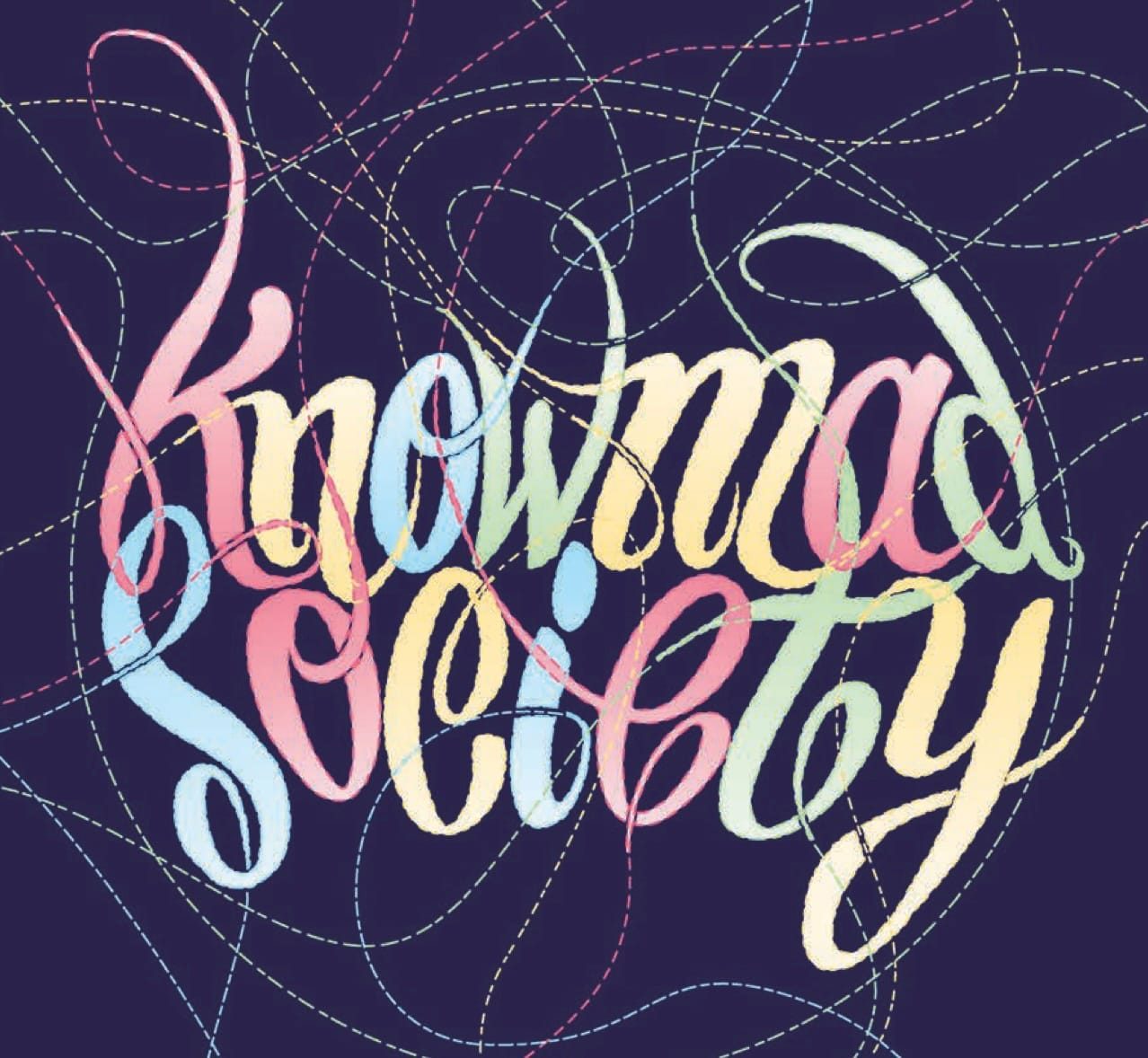
| Cover illustration | Symen Veenstra |
| Additional support | Seats2meet.com |
| License | Creative Commons Attribution-ShareAlike 3.0 Unported |
The license permits sharing and adaptation with attribution under the same license. A German edition and a Russian PDF are available, alongside Kindle and Nook editions.
Cite the book
Moravec, J. W. (Ed.). (2013). Knowmad Society. Education Futures LLC. https://doi.org/10.5281/zenodo.18745314